Anambra
The area today, known as Anambra State was created on August 27, 1991, along with eight other states of Nigeria by the then Military President, Ibrahim Badamasi Babangida GCFR. The state derives its name from Anambra River, which is a colonial convenient pronunciation of Omambala River. The River Anambra is a tributary of the majestic River Niger.
Our Anthem
With all our hearts, we pray and ask, God bless Anambra, God bless the shining light that we bear.
We are the only ones to make her brighter, the only ones to make her better, the only ones to make Anambra shine, with our sweat and blood every breath of our lives, with trust in God, we would lift our homeland high, we believe in togetherness; we’ll build a land of progress.
Lift the spirit of Anambra!
Lift the spirit of Anambra!
Lift the spirit of Anambra State we love.
Geography
The natural features of Hills, Lakes, Caves, Forests, and table Savannah landform the beautiful landscapes of Anambra State.
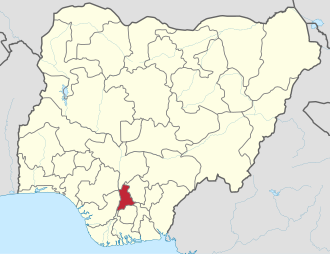
Situated on a rolling flat savannah land, dotted by Hills, Lakes, Forests, and caves on the eastern plains of the River Niger, Anambra State covers an area of 4,416sq kilometers with rainforest vegetation, humid climate, a temperature of about 87°F, and rainfall of between 152cm and 203cm. Anambra State shares boundaries with Abia, Delta, Enugu, Imo, and Kogi States making it one of the few states in the country with many neighbors.
Population
With an estimated population of about 5,084,195 (2015 Census estimate), Anambra is the tenth most populous state in Nigeria.
Natural resources
Anambra is rich in natural gas, crude oil, bauxite, and ceramic. It has an almost 100 percent arable soil.
Agriculture is important in the state: oil palm, corn, rice, yam, and cassava are its main cash crops. Fishing in inland waterways is a significant commercial activity.
The principal minerals found in the state are gypsum, kaolin, bauxite, iron ore, and lead. Anambra state also has natural gas and crude oil. Major industries include breweries, textiles, tourism, and soft drinks bottling. Locally produced sculptures of wood and metal are also of commercial importance.
Economy
The economic climate is highly favourable with a combination of large markets, abundant skilled labour force, entrepreneurial ability and easy access to capital and natural resources. The state has a business environment that is conducive and a number of investment incentives.
The state capital territory, Awka, famous for its legendary blacksmithing, spans six Local Government Areas of Aniocha, Awka South, Awka North, Dunukofia, Njikoka and Orumba North. The Capital Territory covers a land area of 400sq kilometers.
The city of Onitsha has strong trade links with many parts of gthe country and the world. Its market is the largest in West Africa. Nnewi, the second most economically vibrant centre after Onitsha, has virtually become the automobile spare parts market of the nation and a fast-growing industrial centre.